

If you’re wondering how long does it take to become a pharmacist, you’re not alone. Many people are drawn to this profession for its stability, good income, and the opportunity to help others. However, the path to becoming a pharmacist is more than just filling prescriptions it’s a journey that involves years of education, training, and licensing.
This comprehensive guide will walk you through everything you need to know: from the required qualifications to career prospects and the step-by-step process of becoming a licensed pharmacist.
Table of Contents
What Does a Pharmacist Do?

At first glance, a pharmacist may seem like someone who simply fills prescriptions behind a counter. But in reality, pharmacists are highly trained healthcare professionals with critical roles in patient care, medication management, and public health. Their responsibilities are diverse and constantly evolving with advancements in medicine and technology.
Here’s a deeper look at what pharmacists actually do:
1. Dispensing Medications
This is the most recognized duty of a pharmacist. When a doctor prescribes medication, the pharmacist ensures that:
- The correct drug and dosage are dispensed
- There are no dangerous interactions with other medications the patient may be taking
- Instructions are clear and easy to follow
- Patients understand how and when to take their medication
Pharmacists also ensure that prescriptions are legal and comply with government regulations, especially with controlled substances.
2. Providing Patient Education and Counseling
Pharmacists don’t just hand over pills—they educate patients on:
- How to take the medication properly
- Potential side effects or allergic reactions
- What to do if a dose is missed
- How the medication interacts with food, drinks, or other drugs
For patients with chronic illnesses like diabetes, asthma, or hypertension, pharmacists offer counseling and help them manage their condition more effectively.
3. Monitoring Drug Interactions and Allergies
Pharmacists have access to a patient’s medication history and are trained to detect potential interactions between new prescriptions and existing medications. They will:
- Identify potentially harmful drug combinations
- Flag medications that may cause allergic reactions
- Consult with physicians if changes are needed
This helps prevent medical errors and ensures patient safety.
4. Collaborating with Healthcare Providers
Pharmacists are essential members of the healthcare team. They often work with:
- Doctors and nurses to recommend the best medication options
- Insurance companies to help process claims or suggest cost-effective alternatives
- Clinical teams in hospitals to create treatment plans tailored to individual patients
In some cases, pharmacists even have the authority to modify or adjust prescriptions based on patient needs.
5. Administering Vaccinations
Many pharmacists are certified to administer vaccines such as:
- Flu shots
- COVID-19 vaccines
- Travel immunizations
- Hepatitis and shingles vaccines
This has made pharmacies a convenient and accessible place for public health services.
6. Conducting Health Screenings
Pharmacists also perform routine health checks, which may include:
- Blood pressure monitoring
- Blood glucose tests
- Cholesterol screenings
- Smoking cessation consultations
These services help detect health problems early and guide patients toward proper care.
7. Ensuring Quality Control and Regulatory Compliance
Behind the scenes, pharmacists are responsible for:
- Maintaining inventory and storage of medications
- Checking expiration dates
- Complying with state and federal laws regarding prescription drugs
- Reporting any medication errors or adverse effects to regulatory authorities
They also ensure the pharmacy operates under proper ethical and legal standards.
8. Specialized Clinical Roles
Some pharmacists go beyond the counter and specialize in specific areas of healthcare, such as:
- Oncology Pharmacists – Assist in managing cancer medications and chemotherapy
- Pediatric Pharmacists – Focus on drug therapy for children
- Geriatric Pharmacists – Work with older adults who take multiple medications
- Nuclear Pharmacists – Handle radioactive medications used in imaging or treatment
These pharmacists work closely with other specialists to create safe and effective treatment plans.
9. Educating and Mentoring Future Pharmacists
In academic or hospital settings, experienced pharmacists often train interns, conduct research, and teach pharmacy students. They may:
- Develop curriculum
- Conduct clinical trials
- Write research papers or contribute to pharmaceutical journals
This contributes to the advancement of the field and the quality of future healthcare professionals.
In Summary
A pharmacist is far more than a dispenser of medications. They are:
- Educators
- Patient advocates
- Healthcare consultants
- Legal regulators
- Public health contributors
Whether in a hospital, clinic, community pharmacy, or research lab, pharmacists play a vital role in ensuring safe and effective medication use, promoting health literacy, and improving patient outcomes.
Why Choose a Career in Pharmacy?
A career in pharmacy offers:
- Job stability in the ever-growing healthcare industry
- High earning potential, even for entry-level positions
- The opportunity to make a meaningful difference in people’s lives
- Diverse career paths, from retail to hospital settings, research, and academia
- A well-respected position within the healthcare community
Educational Requirements
To become a pharmacist, you’ll need extensive education, typically including:
- High School Diploma or Equivalent – A strong foundation in science and math is helpful.
- Pre-Pharmacy Coursework or Bachelor’s Degree – Often 2 to 4 years of undergraduate study focusing on biology, chemistry, and anatomy.
- Doctor of Pharmacy (Pharm.D.) Degree – A 4-year professional program accredited by the Accreditation Council for Pharmacy Education (ACPE).
Some programs combine undergraduate and Pharm.D. studies into a 6-year accelerated program, but this is less common.
How Long Does It Take to Become a Pharmacist?
In total, it usually takes 6 to 8 years to become a pharmacist:
| Stage | Time Required |
|---|---|
| Pre-pharmacy education | 2–4 years |
| Pharm.D. program | 4 years |
| Licensing exams & internships | 0.5–1 year |
So, how long does it take to become a pharmacist? On average, around 7 to 8 years from high school graduation.
Step-by-Step Guide to Becoming a Pharmacist

Becoming a pharmacist is a structured process that involves several key steps from education and exams to licensing and real-world training. Whether you’re a high school student planning ahead or an adult considering a career change, understanding each stage can help you map out your path clearly.
Here’s a detailed breakdown of the steps required to become a licensed pharmacist:
Step 1: Graduate from High School or Obtain a GED
Your journey begins with a strong foundation in high school. Courses in biology, chemistry, physics, algebra, and calculus are especially helpful for aspiring pharmacists. High academic performance can improve your chances of admission into a competitive undergraduate or pre-pharmacy program.
✅ Tip: Participate in science clubs, health camps, or volunteer at a local pharmacy to gain early exposure.
Step 2: Complete Pre-Pharmacy Coursework or a Bachelor’s Degree (2–4 Years)
Before entering a pharmacy school, you need to complete pre-pharmacy studies. This can be done in two ways:
- Two Years of Pre-Pharmacy Coursework
Many pharmacy schools accept students after completing two years of focused coursework in subjects such as:- General and organic chemistry
- Human anatomy and physiology
- Microbiology
- Calculus and statistics
- English and public speaking
- Full Bachelor’s Degree (Optional, but Common)
Some students choose to complete a Bachelor of Science in Biology, Chemistry, or Health Sciences before applying to pharmacy school. This route is often more competitive but may open doors to alternative careers if pharmacy doesn’t work out.
✅ Note: Always check the specific pre-requisite requirements for your target pharmacy schools.
Step 3: Take the PCAT (Pharmacy College Admission Test) – If Required
Some Pharm.D. programs require applicants to take the PCAT, a standardized test that evaluates your academic ability and scientific knowledge. It includes sections on:
- Biology
- Chemistry
- Reading comprehension
- Quantitative reasoning
- Writing
However, many schools are moving away from requiring the PCAT, so verify with your preferred institutions.
Step 4: Apply and Get Admitted into a Doctor of Pharmacy (Pharm.D.) Program (4 Years)
Once your pre-pharmacy requirements are complete, you can apply to a Pharm.D. program, which typically lasts four years. Admission is competitive and often requires:
- A minimum GPA (usually 2.5 or higher)
- Letters of recommendation
- A personal statement or interview
- PCAT scores (if required)
Once admitted, your coursework will include:
Years 1–2: Classroom Learning
- Pharmacology
- Pharmaceutics (how drugs are made/formulated)
- Pathophysiology (how diseases affect the body)
- Biochemistry
- Pharmacy law and ethics
- Communications and patient counseling
Years 3–4: Clinical Rotations
- Hands-on experience in hospitals, clinics, retail pharmacies, and specialized healthcare settings.
- You’ll rotate through different areas like pediatrics, oncology, infectious diseases, and internal medicine.
- This helps you develop practical skills and explore your interests before graduation.
✅ Tip: Choose a program accredited by the Accreditation Council for Pharmacy Education (ACPE).
Step 5: Complete Pharmacy Internships or Work Experience (May Overlap with Pharm.D.)
Most states require a certain number of internship hours, which are typically completed during your clinical rotations in the Pharm.D. program. However, you can also gain additional experience by:
- Working as a pharmacy intern at a retail drugstore
- Volunteering at a hospital pharmacy
- Participating in summer research or public health projects
These experiences are critical for building real-world knowledge and meeting state licensing requirements.
Step 6: Pass the Licensing Exams (NAPLEX and MPJE)
Before you can practice, you’ll need to pass the required national and state-specific licensing exams:
- NAPLEX (North American Pharmacist Licensure Examination)
- Tests your knowledge of medication therapy, patient care, and pharmaceutical calculations.
- 6-hour, 225-question exam.
- Administered by the National Association of Boards of Pharmacy (NABP).
- MPJE (Multistate Pharmacy Jurisprudence Examination)
- Focuses on pharmacy law and ethics.
- Required by most U.S. states.
- Covers federal and state-specific regulations.
Some states may require additional exams or certifications (e.g., compounding or immunization).
Step 7: Apply for State Licensure
Once you’ve passed your exams, you must apply for a license through your state’s Board of Pharmacy. This process often includes:
- Submitting proof of completed internship hours
- Providing transcripts and exam results
- Paying a licensing fee
- Undergoing a criminal background check
After approval, you’re officially licensed and ready to practice as a pharmacist!
Step 8: Optional – Complete a Residency or Fellowship (1–2 Years)
While not required for general practice, residencies and fellowships are valuable for pharmacists who want to specialize. Common specialties include:
- Clinical pharmacy
- Ambulatory care
- Oncology
- Infectious disease
- Geriatrics
- Psychiatric pharmacy
- Research and drug development
Residencies usually last 1–2 years and are often required for roles in hospitals, academia, or industry.
Step 9: Begin Your Career as a Pharmacist
Now that you’re fully licensed, you can start working in a variety of settings:
- Retail pharmacies (e.g., CVS, Walgreens)
- Hospitals and clinics
- Long-term care facilities
- Pharmaceutical companies
- Research labs
- Government health departments
- Academia and education
As you gain experience, you can also take on leadership roles, open your own pharmacy, or pursue further certifications and training.
Summary Timeline
| Stage | Time Required |
|---|---|
| High School | 4 years |
| Pre-Pharmacy Coursework | 2–4 years |
| Pharm.D. Program | 4 years |
| Licensing & Internships | 6–12 months |
| Optional Residency/Fellowship | 1–2 years |
Total time to become a pharmacist: 6–8 years (or up to 10 years with specialization)
Types of Pharmacists and Specializations
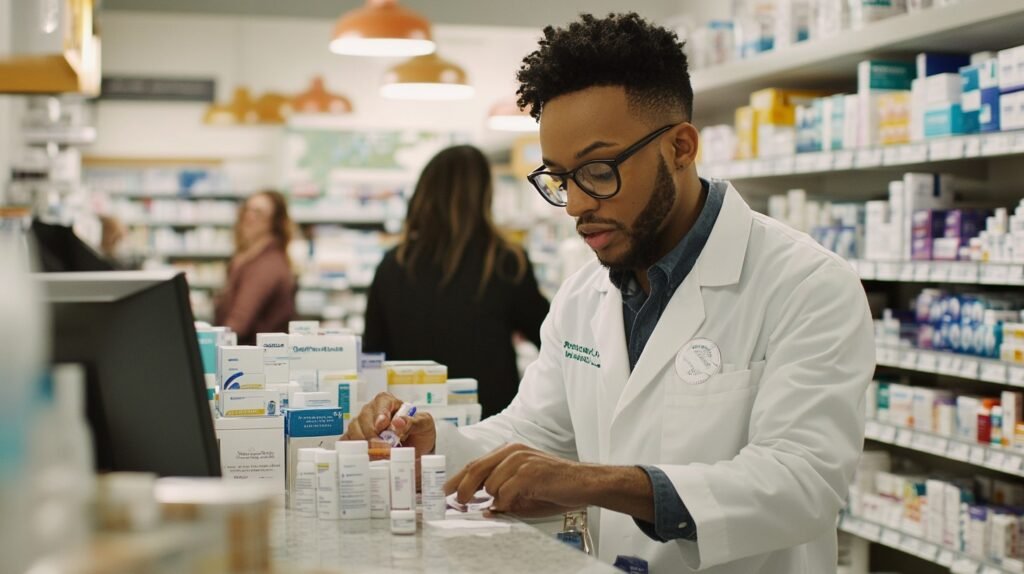
Once licensed, pharmacists can choose from various paths:
- Retail Pharmacist – Works in drugstores or supermarkets
- Hospital Pharmacist – Collaborates with doctors to ensure patient care
- Clinical Pharmacist – Specializes in disease-specific medication management
- Nuclear Pharmacist – Prepares radioactive materials for imaging or therapy
- Pharmaceutical Industry Pharmacist – Involved in drug development and marketing
- Academia and Research – Teaches or conducts pharmaceutical research
Work Settings for Pharmacists
Pharmacists can work in:
- Community pharmacies
- Hospitals and clinics
- Nursing homes
- Government health departments
- Universities and research labs
- Pharmaceutical companies
Job Outlook and Salary Expectations
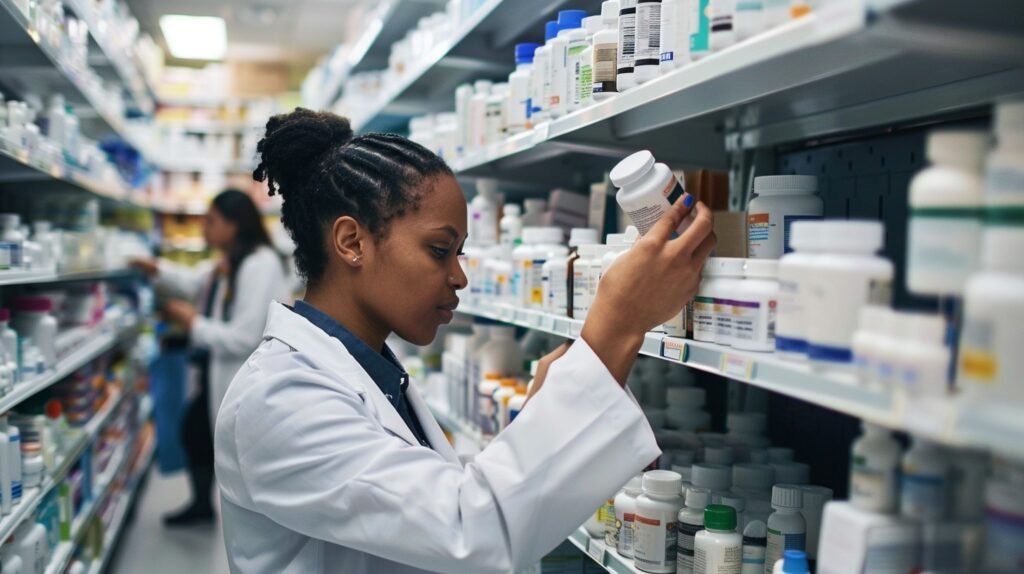
Choosing a career isn’t just about personal interest—it’s also about long-term viability, earning potential, and job stability. Pharmacists have traditionally enjoyed strong demand and competitive salaries, but the field is evolving. Below, we explore what you can expect in terms of job opportunities, career growth, and income as a pharmacist in today’s healthcare landscape.
Job Outlook for Pharmacists
The job outlook for pharmacists has become more nuanced in recent years. According to the U.S. Bureau of Labor Statistics (BLS):
- Employment is projected to grow slightly slower than average between 2021 and 2031.
- This trend is influenced by shifts in the pharmacy industry such as automation in medication dispensing and the rise of online/mail-order pharmacies.
- However, clinical roles in hospitals, long-term care facilities, and ambulatory care settings are growing, offering new opportunities for pharmacists with advanced training or residencies.
Key Growth Areas:
- Hospitals & Clinics:
With a greater emphasis on patient safety, chronic disease management, and collaborative healthcare teams, clinical pharmacists are in demand. - Specialized Pharmacy Roles:
Areas like oncology, geriatrics, and psychiatric pharmacy are growing as the population ages and treatment becomes more personalized. - Pharmacy Informatics & Technology:
Pharmacists are increasingly involved in the development and implementation of electronic medical records and medication safety systems. - Telepharmacy:
Virtual pharmacy services, especially in rural and underserved areas, are expanding with advancements in technology.
Employment Settings and Competition
- Retail pharmacies still employ the largest number of pharmacists, but this area is more competitive due to corporate consolidation and automation.
- Hospital and clinical pharmacy jobs offer better long-term growth but often require additional education, such as a residency.
✅ Summary: While growth in traditional retail settings is slow, new roles in clinical care, research, and technology are creating fresh opportunities for pharmacists who adapt and specialize.
Salary Expectations for Pharmacists
Pharmacists are among the highest-paid professionals in the healthcare sector who do not hold a medical or dental degree.
Average Salary (United States):
- Entry-Level Pharmacist:
$110,000 – $120,000 annually - Mid-Career Pharmacist (5–10 years experience):
$125,000 – $135,000 annually - Experienced or Specialized Pharmacist:
$140,000 – $160,000+ annually
Hourly Rate:
Most pharmacists earn between $50 to $65 per hour, depending on their employer, location, and level of experience.
🏥 Salaries by Work Setting
| Work Setting | Average Annual Salary (USD) |
|---|---|
| Retail Pharmacy (e.g., CVS, Walgreens) | $120,000 – $130,000 |
| Hospital Pharmacy | $130,000 – $140,000 |
| Clinical or Ambulatory Care | $125,000 – $135,000 |
| Long-Term Care Facilities | $115,000 – $130,000 |
| Pharmaceutical Industry (R&D, sales) | $140,000 – $160,000+ |
| Government/Public Health | $110,000 – $135,000 |
| Academia (teaching, research) | $100,000 – $120,000 |
✅ Note: Salaries can vary significantly based on geographic region. Pharmacists in high-cost-of-living areas such as California, New York, and Washington often earn more than those in rural or lower-cost regions.
International Perspective
If you’re considering working abroad, here are average pharmacist salaries in other countries:
| Country | Average Annual Salary (USD Equivalent) |
|---|---|
| Canada | $85,000 – $110,000 |
| United Kingdom | $45,000 – $70,000 |
| Australia | $80,000 – $100,000 |
| South Africa | $25,000 – $45,000 |
| India | $5,000 – $12,000 |
📌 Tip: Licensing requirements vary widely by country, and international pharmacists may need to pass additional exams or retrain to practice in certain regions.
Additional Earning Opportunities
Pharmacists may also increase their income through:
- Overtime and shift differentials
- Management or supervisory positions
- Consulting for healthcare companies
- Owning or co-owning a pharmacy
- Teaching and academic roles
- Residency-trained or board-certified specialties (e.g., BCPS, BCGP)
Final Thoughts on Career Outlook
While automation and consolidation are changing the pharmacy landscape, pharmacists remain critical players in healthcare especially in roles that involve direct patient care, clinical decision-making, and public health services.
To stay competitive and increase your job opportunities, consider:
- Pursuing a residency or fellowship
- Earning a board certification (e.g., in oncology or ambulatory care)
- Gaining experience in hospital or clinical settings
- Developing additional skills in informatics, immunization, or patient counseling
Challenges of the Profession

While rewarding, being a pharmacist comes with its own set of challenges:
- Long hours, especially in retail settings
- High levels of responsibility errors can be dangerous
- Stress from dealing with insurance companies and regulations
- Keeping up with constantly changing drug information and technologies
Rewards of Becoming a Pharmacist
Despite the challenges, the benefits are significant:
- Excellent salary and job stability
- Opportunities to help people daily
- Diverse work environments and roles
- Prestige and respect in the healthcare field
- Continuous learning and growth opportunities
FAQs
Can I become a pharmacist without a Pharm.D. degree?
No, a Doctor of Pharmacy (Pharm.D.) is required to become a licensed pharmacist.
Is pharmacy school hard?
Yes, pharmacy programs are academically rigorous and require a strong foundation in science and math.
Do pharmacists need residency training?
Residency is optional but highly recommended for clinical and specialized roles.
Can I become a pharmacist online?
Some programs offer hybrid options, but you must complete in-person clinical training and exams.
Is becoming a pharmacist worth it?
If you’re passionate about healthcare, science, and helping people, many pharmacists find the career highly rewarding both financially and personally.
Conclusion
So, how long does it take to become a pharmacist? On average, you’ll need 6 to 8 years of education and training after high school. The journey is challenging, but the rewards financially, intellectually, and emotionally make it a worthwhile path for many.
Whether you’re just graduating high school or thinking about switching careers, understanding the process is the first step toward achieving your goal. Now that you know what it takes, you can start planning your journey toward becoming a pharmacist today.