
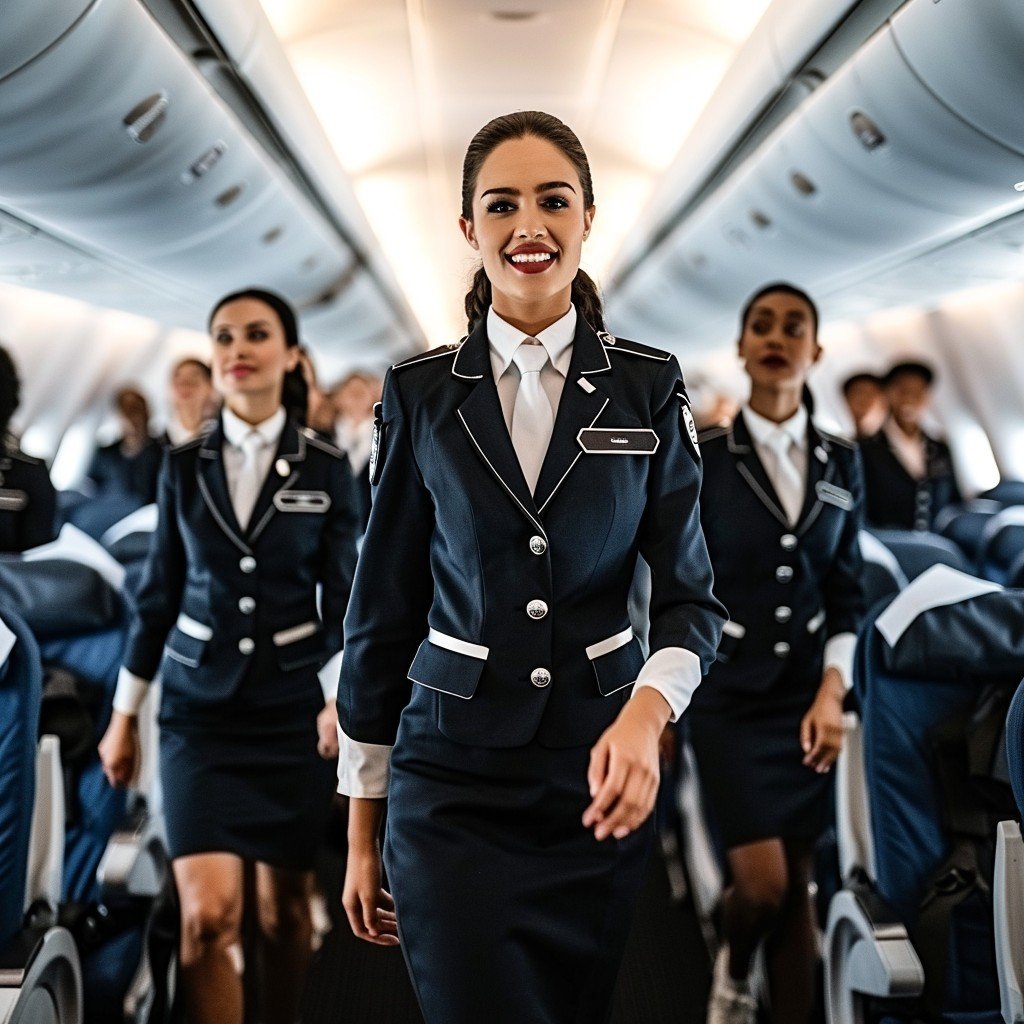
If you’ve ever dreamed of traveling the world while working, you may have asked yourself: how to become a flight attendant in South Africa? The career of a flight attendant is exciting, fast-paced, and rewarding, offering the opportunity to meet new people and explore different destinations. However, it also requires training, discipline, and dedication.
In this comprehensive guide, we’ll cover everything you need to know about becoming a flight attendant in South Africa including requirements, training, job opportunities, and tips to help you succeed.
Table of Contents
1. Understanding the Role of a Flight Attendant

When people think of flight attendants, they often imagine smiling faces serving meals and drinks during a flight. While customer service is part of the role, the responsibilities of a flight attendant go far beyond hospitality. The main purpose of the job is to ensure passenger safety, comfort, and well-being throughout the journey.
1. Safety First
Safety is the top priority for every flight attendant. They are trained to handle emergency situations such as evacuations, medical incidents, turbulence, or fire on board. Their role includes:
- Demonstrating safety procedures before take-off.
- Checking that passengers follow safety regulations (like seatbelts and stowing luggage).
- Being prepared to manage emergencies with calmness and professionalism.
2. Customer Service
Flight attendants are also the face of the airline. They welcome passengers, assist with seating, and provide meals or refreshments. More importantly, they help create a pleasant experience by addressing passenger concerns, resolving issues, and ensuring everyone feels comfortable during the flight.
3. Communication and Teamwork
Cabin crew work closely with pilots and other crew members. Clear communication is essential for coordinating service, responding to emergencies, and maintaining order on the aircraft. They also bridge the gap between passengers and the cockpit crew by relaying important information.
4. First Aid and Medical Assistance
Flight attendants receive first aid training to handle in-flight medical emergencies. This may include helping passengers with minor health issues or assisting doctors and medical professionals who may be on board.
5. Cultural Awareness
Since flights often include passengers from different countries, flight attendants need to respect and adapt to cultural differences. This helps ensure smooth interactions and a welcoming environment for all travelers.
6. Representing the Airline
As brand ambassadors, flight attendants represent the airline’s values and standards. Their professionalism, appearance, and attitude all contribute to how passengers perceive the airline.
In short, the role of a flight attendant is multi-dimensional. It combines safety, service, teamwork, and adaptability, making it one of the most dynamic careers in the aviation industry.
2. Minimum Requirements to Become a Flight Attendant in South Africa

If you are serious about becoming a flight attendant in South Africa, the first step is understanding the minimum requirements. Airlines set these standards to ensure that candidates are physically, mentally, and professionally ready to handle the responsibilities of the job. While requirements may differ slightly from one airline to another, the following are common across most South African carriers.
Age Requirement
Most airlines require candidates to be 18 years or older. Some airlines may prefer applicants who are 21 and above, especially for international routes.
Educational Qualification
- A Grade 12 / Matric certificate (or equivalent) is the minimum requirement.
- Good grades in English and Mathematics are often preferred, since strong communication and numerical skills are useful on the job.
Height and Reach
Flight attendants need to reach overhead storage bins and operate safety equipment.
- Minimum height requirements usually range between 1.55m and 1.65m.
- Candidates may also be tested on their arm reach to ensure they can access emergency equipment.
Health and Fitness
Because the role is physically demanding, airlines require candidates to be in good health.
- A valid medical certificate from an aviation medical examiner is usually needed.
- Good vision (corrective glasses or contact lenses are generally allowed).
- Ability to swim is often a requirement, since flight attendants must be prepared for water landings.
Language Skills
English is the international language of aviation, so fluency in spoken and written English is essential.
- Being bilingual or multilingual (for example, speaking Afrikaans, Zulu, Xhosa, or other languages) can be an added advantage, especially for airlines that serve diverse passenger groups.
Background Checks
Airlines place great emphasis on passenger safety and security.
- Applicants must pass a criminal background check.
- A clear credit record may also be required by some airlines.
Personality and Appearance
Since flight attendants are the face of the airline, appearance and professionalism are taken seriously. Airlines generally look for candidates who are:
- Well-groomed and presentable
- Polite and professional in behavior
- Friendly, approachable, and customer-service oriented
South African Civil Aviation Authority (SACAA) Cabin Crew License
To officially work as a flight attendant in South Africa, you must hold a valid Cabin Crew License (CCL) issued by the South African Civil Aviation Authority (SACAA).
- This license is obtained after completing approved cabin crew training.
- The training includes safety procedures, first aid, firefighting, and evacuation drills.
In summary: To become a flight attendant in South Africa, you need to meet minimum requirements such as having a Matric certificate, being in good health, having strong communication skills, and holding a SACAA Cabin Crew License. These requirements ensure that flight attendants can perform their duties effectively and keep passengers safe while delivering excellent service.
3. Flight Attendant Training in South Africa
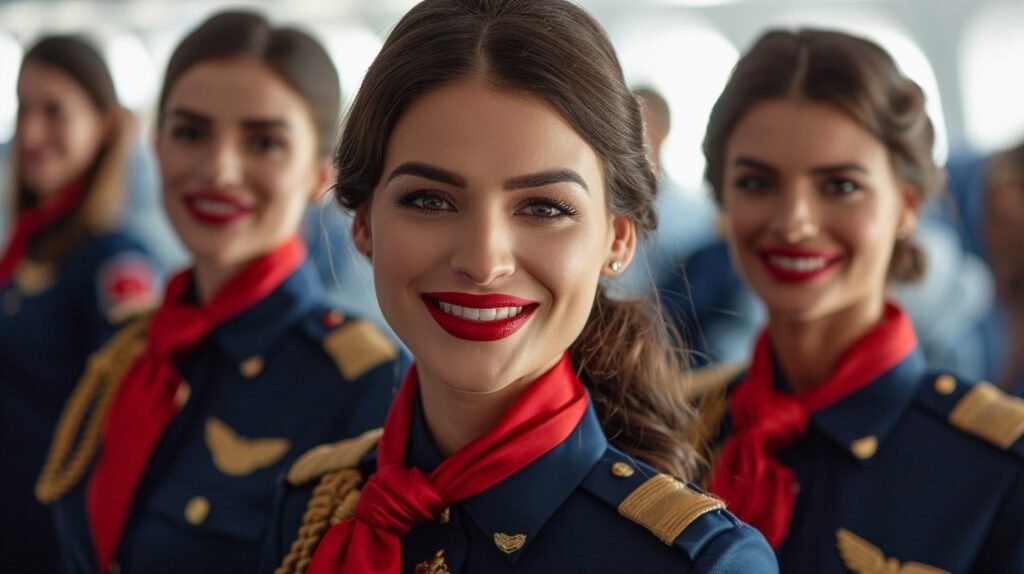
To officially qualify as a flight attendant, you need to complete Cabin Crew Training accredited by the South African Civil Aviation Authority (SACAA). This training equips you with the knowledge and skills to handle safety and service responsibilities.
Subjects Covered in Training
- Aviation regulations and procedures
- Firefighting and smoke control
- First aid and medical emergencies
- Passenger handling and customer service
- Ditching (emergency water landings) and evacuation procedures
- Dangerous goods awareness
Duration of Training
Most courses last between 6 to 8 weeks, depending on the training provider.
Accredited Training Providers
Some well-known SACAA-accredited training schools include:
- Big Sky Cabin Training Academy
- Cabin Crew Academy (Benoni, Gauteng)
- Future Flyers Academy
- EPT Aviation Training
4. Costs of Training
One of the most important factors to consider when becoming a pilot is the cost of training. Flight training can be a significant financial investment because it involves not only classroom lessons but also practical flying hours, exams, and licensing fees.
The costs vary depending on the type of pilot license you want to pursue. For example, a Private Pilot License (PPL) usually costs less than a Commercial Pilot License (CPL) because it requires fewer flying hours and less advanced training. However, if your goal is to work for airlines or cargo companies, you’ll need to complete commercial training, which is more expensive.
In South Africa, training costs may range from R100,000 to R150,000 for a PPL and can exceed R800,000 for a CPL, depending on the flight school, location, and aircraft used. These costs usually include:
- Ground school tuition (theoretical lessons).
- Flying hours with instructors.
- Simulator training.
- Examination and licensing fees.
- Uniforms, study material, and medical assessments.
It’s also important to budget for additional expenses such as fuel surcharges, extra practice hours if needed, and accommodation if you train far from home.
Because of the high costs, many aspiring pilots explore financing options. Some banks offer student loans for aviation training, while certain airlines provide sponsorships or cadet programs for selected candidates. Planning ahead and understanding your financial options can make the journey more manageable.
5. Application Process: How to Apply for Flight Attendant Jobs

The application process for flight attendant positions is structured to identify candidates who meet both the professional and personal qualities airlines look for. While details may vary between airlines, the general steps usually include:
Online Application
Most airlines start with an online application through their official careers portal. You’ll be asked to provide personal information, upload your CV, and sometimes include a cover letter. It’s important to highlight relevant experience such as customer service, communication skills, and teamwork.
Screening and Shortlisting
Once applications are submitted, the recruitment team reviews them. Candidates who meet the basic requirements (such as age, height, education, and language skills) are shortlisted for further assessments.
Assessment Day
Airlines often host an assessment day where applicants participate in group activities, role-plays, and problem-solving tasks. This stage is designed to evaluate interpersonal skills, professionalism, and the ability to remain calm under pressure.
Interviews
Successful candidates from the assessment day are invited to one-on-one or panel interviews. Here, recruiters may ask about your motivation to become a flight attendant, your understanding of customer service, and how you would handle challenging situations onboard.
Medical and Background Checks
Because safety is a top priority, applicants must pass medical examinations to ensure they are fit to perform cabin duties. Background checks are also carried out to verify employment history and personal integrity.
Final Offer and Training
If you pass all the stages, you’ll receive a conditional job offer. Before officially joining the airline, you’ll need to complete cabin crew training provided by the employer. This training covers safety procedures, first aid, service protocols, and emergency response.
6. Career Growth and Opportunities
Becoming a flight attendant in South Africa is not just a job it can be the start of an exciting and rewarding career. While many people join the profession for the opportunity to travel and meet people from different cultures, there are also long-term growth opportunities within the aviation industry.
1. Advancing to Senior Flight Attendant
After gaining experience, many cabin crew members move up to the role of senior or lead flight attendant. In this position, you supervise other crew members, coordinate service delivery, and ensure safety standards are followed. This step often comes with higher responsibility and better pay.
2. Becoming a Purser or Cabin Manager
With several years of experience, you may progress to the role of purser (sometimes called a cabin manager). This position involves managing the entire cabin crew team, handling passenger issues, and ensuring smooth communication with the flight deck.
3. Transition to Ground-Based Roles
Some flight attendants choose to shift to ground operations after several years of flying. Opportunities include:
- Recruitment and Training – teaching new cabin crew recruits.
- Customer Service Management – working in airports to oversee passenger experience.
- Operations and Administration – helping coordinate flight schedules or crew logistics.
4. Opportunities in International Airlines
South African flight attendants often use their experience as a stepping stone to apply for international airlines. Carriers in the Middle East, Europe, and Asia frequently recruit experienced cabin crew who already meet high safety and service standards.
5. Building Skills Beyond Aviation
The skills gained as a flight attendant such as communication, problem-solving, crisis management, and cultural awareness are highly transferable. They can open doors in industries like hospitality, tourism, customer service, or even corporate training.
6. Personal Growth
In addition to professional opportunities, many flight attendants find that the job allows them to grow personally. Traveling to different destinations, adapting to diverse cultures, and handling high-pressure situations help build confidence and adaptability.
✨ In short, a flight attendant career can lead to leadership positions within the cabin crew, opportunities in ground operations, and even international careers. It also equips you with lifelong skills that can benefit you in various industries.
7. Pros and Cons of Being a Flight Attendant
Like any career, there are both advantages and challenges.
Pros
- Opportunity to travel domestically and internationally
- Meeting diverse people from around the world
- Competitive salary and travel benefits
- Career growth and training opportunities
Cons
- Irregular working hours, including nights and weekends
- Time away from family and friends
- Physically demanding and sometimes stressful situations
- Strict appearance and grooming standards
8. Tips for Success as a Flight Attendant
If you want to stand out and succeed in this competitive field, here are some tips:
- Work on customer service skills: Airlines value friendly, patient, and professional staff.
- Stay fit and healthy: Good stamina and appearance are important.
- Improve your language skills: Learning an additional language like French, Portuguese, or German is a plus.
- Be adaptable and flexible: The job requires quick thinking and calmness under pressure.
- Network and research airlines: Understand each airline’s values and tailor your application accordingly.
9. Frequently Asked Questions (FAQ)

1. How long does it take to become a flight attendant in South Africa?
On average, it takes 6–12 months including training, certification, and recruitment.
2. Do I need prior work experience?
Not always, but customer service experience in hospitality, retail, or tourism is a strong advantage.
3. How much do flight attendants earn in South Africa?
Salaries vary by airline, but the average ranges between R10,000 to R25,000 per month, with additional benefits like travel allowances.
4. Can men become flight attendants?
Yes, the profession is open to both men and women.
5. Do airlines cover training costs?
Some airlines may sponsor training once you’re hired, but most require you to have a Cabin Crew License before applying.
6. How long does it take to become a flight attendant in South Africa?
The training period usually lasts between 6 to 8 weeks, depending on the airline or training academy. This includes safety procedures, first aid, and customer service training. However, the application and recruitment process can take a few additional months.
7. Do I need previous experience to apply?
Previous customer service experience is helpful but not always required. Many airlines look for people with strong communication skills, a positive attitude, and the ability to remain calm under pressure.
8. What qualifications are needed to apply?
Most airlines in South Africa require:
- A matric certificate (Grade 12 or equivalent).
- Good health and physical fitness.
- Fluency in English, and sometimes an additional language.
- The ability to swim unaided.
9. Is flight attendant training expensive?
Yes, there are costs involved if you enroll in a training academy. The fees may vary depending on the institution, ranging from several thousand to tens of thousands of rand. However, some airlines provide training once you are hired.
10. Can I work for international airlines after training in South Africa?
Yes. Many South Africans go on to work for global carriers, especially in the Middle East and Asia. Meeting international airlines’ requirements and gaining experience locally can improve your chances.
11. What is the lifestyle of a flight attendant like?
The job comes with irregular working hours, including weekends and holidays. You may spend nights away from home, but you also get the chance to travel, explore new places, and meet people from diverse cultures.
12. What are the biggest challenges of the job?
Some challenges include long shifts, dealing with difficult passengers, and managing jet lag. Despite this, many flight attendants find the career rewarding because of the travel opportunities and personal growth it offers.
13. Do flight attendants get travel benefits?
Yes, most airlines provide discounted or free travel perks for their employees. Some also extend these benefits to close family members, depending on the airline’s policies.
10. Conclusion
Becoming a flight attendant in South Africa is a rewarding career path for those passionate about travel, service, and aviation. It requires dedication, investment in training, and the right personal qualities. By completing accredited cabin crew training, meeting the minimum requirements, and preparing a strong application, you can take the first steps toward your dream job.
Whether you aim to work for a local airline or explore international opportunities, this career offers exciting growth and unforgettable experiences.
Now that you know how to become a flight attendant in South Africa, the journey to the skies starts with preparation, training, and determination.