
Knowing how to win a CCMA case as an employee starts with understanding the process and being well-prepared. For many workers in South Africa, taking a dispute to the Commission for Conciliation, Mediation and Arbitration (CCMA) can feel intimidating, especially if it’s their first time. The CCMA was established to give employees and employers a fair, neutral platform to resolve workplace issues without the high costs and complexities of court.
This guide explains what the CCMA is, why employees take cases there, and what steps can help strengthen your position. By the end, you’ll have a clearer idea of how the process works, what to expect from your employer, and how to prepare yourself in a professional and confident way.
Table of Contents
What Is the CCMA and Its Role?
The Commission for Conciliation, Mediation and Arbitration (CCMA) is an independent body in South Africa that was established to promote fairness in the workplace. Its main purpose is to help resolve disputes between employers and employees in a way that is accessible, affordable, and less formal than going to court.
The CCMA plays a vital role in maintaining balanced labour relations. It acts as a neutral third party, which means it does not represent either the employer or the employee. Instead, it provides a structured platform where both sides can present their cases, and a trained commissioner works to find a fair outcome.
Key Roles of the CCMA
- Conciliation – The CCMA tries to help both parties reach a mutual agreement through discussion and negotiation. This step is informal and focuses on finding common ground.
- Mediation – Where necessary, the commissioner may guide the discussion more actively, helping both sides explore possible solutions to resolve the dispute.
- Arbitration – If conciliation fails, the case may move to arbitration. Here, the commissioner listens to both parties, examines evidence, and makes a legally binding decision.
- Education and Awareness – The CCMA also helps educate workers and employers about their rights and obligations under South African labour law.
- Promoting Fair Labour Practices – By resolving disputes fairly, the CCMA ensures workplaces are more stable and respectful, which benefits both businesses and employees.
Why the CCMA Matters
The CCMA ensures that employees who may not have the financial means to hire legal teams still have access to justice. At the same time, it gives employers a fair chance to explain their side of the story. This balance helps protect workplace rights, reduce conflict, and encourage better working relationships.
In short, the CCMA is a bridge between workers and employers. It promotes fairness, ensures disputes are resolved in a structured way, and protects both sides by applying labour laws fairly and consistently.
Reasons Employees Take Cases to the CCMA
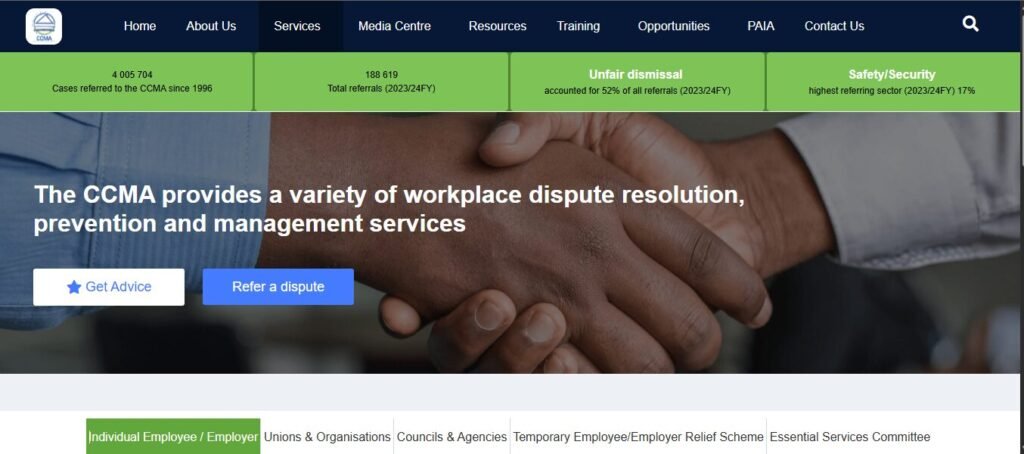
Employees approach the CCMA for a variety of workplace-related disputes. Since the CCMA was created to ensure fair labour practices, it provides employees with an accessible way to raise concerns without the complexity and high costs of a traditional court process.
Here are the most common reasons employees take cases to the CCMA:
1. Unfair Dismissal
One of the leading reasons employees turn to the CCMA is when they feel they have been dismissed unfairly. This could happen if:
- The dismissal had no valid reason.
- The employer did not follow proper procedures before dismissing the employee.
- The employee believes the dismissal was motivated by bias or discrimination.
In such cases, the CCMA allows the employee to challenge the dismissal and seek remedies such as reinstatement or compensation, depending on the outcome.
2. Unfair Labour Practices
An unfair labour practice occurs when an employee is treated in a way that is unjust or inconsistent with workplace policies and the law. Examples include:
- Being demoted without a fair process.
- Not being considered for promotion despite meeting the criteria.
- Receiving unfair disciplinary action compared to other colleagues.
Employees bring such disputes to the CCMA to ensure fairness and accountability in how employers handle workplace decisions.
3. Retrenchments and Job Losses
Retrenchment happens when employers reduce staff due to operational reasons such as restructuring or financial difficulties. Employees may take a retrenchment case to the CCMA if:
- The process was not conducted fairly.
- They believe they were targeted unfairly.
- Proper consultation procedures were not followed.
The CCMA reviews such disputes to ensure retrenchments are handled legally and fairly.
4. Discrimination in the Workplace
South African labour law protects employees against unfair discrimination based on factors such as race, gender, age, disability, religion, or other personal characteristics. When employees feel they have been treated unfairly or excluded because of these reasons, they may refer the matter to the CCMA for investigation and resolution.
5. Contractual and Benefit Disputes
Employees also approach the CCMA when disputes arise regarding employment contracts or benefits. These include issues such as:
- Unpaid salaries or overtime.
- Disagreements about leave entitlements.
- Breaches of employment agreements.
In such cases, the CCMA examines the contract, workplace policies, and the law to determine a fair outcome.
Why These Cases Go to the CCMA
The main reason employees take cases to the CCMA is because it provides:
- Accessibility – The process is less formal than court and does not require expensive legal representation.
- Neutrality – The CCMA is independent and ensures both parties are heard fairly.
- Efficiency – Cases are often resolved more quickly than through traditional legal systems.
Ultimately, employees approach the CCMA because it gives them a fair and affordable opportunity to have their workplace issues addressed and resolved.
Preparing for Your CCMA Case

Winning at the CCMA starts with preparation. Here are steps to follow:
1. Gather Evidence
The strength of your case depends on the evidence you present. Keep records of:
- Employment contracts
- Payslips and correspondence
- Written warnings or notices
- Emails, messages, or memos
- Notes of conversations with your employer
2. Understand Your Rights
Read through the Labour Relations Act (LRA) and the Basic Conditions of Employment Act (BCEA). You don’t need to be a legal expert, but knowing your rights will help you present your case clearly.
3. Seek Advice or Representation
While you don’t need a lawyer, you may seek help from:
- Trade unions
- Labour consultants
- Legal Aid (if eligible)
- Advice centres
These organisations can guide you on how to prepare without necessarily representing you.
The CCMA Process Step by Step
Step 1: Referral of a Dispute
- An employee must refer a dispute within 30 days of dismissal or the act of unfair labour practice.
- You complete Form 7.11 and submit it to the CCMA.
Step 2: Conciliation
- A commissioner meets with both parties in an informal setting.
- The goal is to reach a mutual agreement.
- If conciliation fails, a certificate of non-resolution is issued.
Step 3: Arbitration
- A more formal process where evidence and arguments are presented.
- The commissioner listens to both sides and makes a binding decision.
- Witnesses can be called, and documents presented.
Step 4: Awards and Enforcement
- If you win, the commissioner issues an award, which may include reinstatement, compensation, or correction of unfair practices.
- Awards are legally binding and enforceable.
Tips for Strengthening Your Case as an Employee
When you take a dispute to the CCMA, preparation is the key to success. While the commissioner’s decision will be based on the facts and evidence presented, how you prepare and conduct yourself can significantly influence the outcome. Here are some helpful tips to strengthen your case as an employee:
1. Keep Detailed Records
From the day you start working, make it a habit to keep copies of important documents. These can include:
- Employment contracts and job descriptions.
- Payslips, overtime records, and proof of payments.
- Written warnings, notices, or termination letters.
- Emails, WhatsApp messages, or other communication with your employer.
Having these records available makes it easier to prove your version of events.
2. Understand the Basis of Your Claim
Before presenting your case, be clear about why you believe you were treated unfairly. For example, if you are claiming unfair dismissal, ask yourself:
- Was there a valid reason given for the dismissal?
- Was the correct procedure followed?
The clearer you are about the grounds of your dispute, the stronger your argument will be.
3. Prepare Your Evidence Carefully
Organize your documents in a logical order so they are easy to present during the hearing. Highlight important parts of contracts, emails, or records that support your claim. If you plan to bring witnesses, make sure they understand what they will be asked and that they are willing to attend.
4. Be Honest and Consistent
Commissioners can often detect when someone is exaggerating or withholding information. Stick to the facts and avoid overstating your case. If your version is consistent and supported by evidence, it carries more weight.
5. Remain Professional
Your attitude at the CCMA can impact how your case is viewed. Show respect to the commissioner, your employer, and any witnesses. Avoid emotional outbursts, interruptions, or arguments. Staying calm and respectful demonstrates credibility and maturity.
6. Know What Outcome You Want
Think about what you are hoping to achieve from the process. Are you looking for reinstatement, compensation, or simply to clear your name? Being clear about your desired outcome allows you to present your case more effectively.
7. Seek Guidance if Needed
You don’t have to face the CCMA process alone. You can approach:
- Trade unions for support.
- Labour advice centres for guidance.
- Legal Aid (if eligible) for assistance.
Even if you cannot be represented formally, getting advice before your hearing can help you feel more confident and prepared.
Final Thought
Strengthening your case at the CCMA comes down to preparation, professionalism, and evidence. By keeping detailed records, being clear about your claim, and presenting yourself respectfully, you give yourself the best possible chance of a fair outcome.
Common Mistakes Employees Make at the CCMA
- Referring a case too late and missing deadlines.
- Coming unprepared without supporting documents.
- Focusing on emotions rather than facts.
- Assuming the CCMA will automatically side with the employee.
- Not understanding the legal grounds of their claim.
How to Present Yourself Professionally at the Hearing
- Dress neatly, as you would for an interview.
- Address the commissioner respectfully.
- Listen carefully and don’t interrupt.
- Speak clearly and avoid unnecessary details.
- Remain calm, even if your employer says something you disagree with.
What to Expect from Employers at the CCMA
When you refer a case to the CCMA, it is important to understand that your employer also has the right to present their side of the story. Being aware of how employers usually prepare can help you manage expectations and avoid surprises during the process.
1. Employers May Come Prepared With Documentation
Employers often bring detailed records to support their case. These may include:
- Signed employment contracts.
- Disciplinary records or written warnings.
- Attendance or performance reports.
- Termination letters and communication records.
This is why it is equally important for you as an employee to keep your own documents. The commissioner will compare both sides of the evidence before making a decision.
2. HR or Management Representation
In many cases, the employer may send a manager or HR representative to attend the CCMA proceedings. Larger companies may even bring external consultants or legal practitioners if the law allows it. Their role is to explain the employer’s position and provide supporting information.
3. Witnesses on Behalf of the Employer
Just as employees can call witnesses, employers may also bring colleagues, supervisors, or other staff members who can testify about the events in question. Witnesses may provide their version of what happened during workplace incidents, performance reviews, or disciplinary hearings.
4. Employers Will Present Their Side of the Story
It’s important to remember that the CCMA is not only there for employees it is a neutral platform. This means employers will also be given the chance to:
- Explain the reasons for their actions.
- Demonstrate that correct procedures were followed.
- Argue that the employee’s claims are not valid or are exaggerated.
5. Settlement Offers May Be Made
Sometimes, employers may offer to settle the matter during the conciliation stage. This can include financial compensation, withdrawal of a disciplinary warning, or other forms of agreement. Whether you accept or decline is entirely up to you, but you should carefully consider if the offer meets your needs before making a decision.
6. Professional Conduct From Employers
Just like employees, employers are expected to behave respectfully during CCMA proceedings. While they may present strong arguments, commissioners generally do not tolerate aggressive or disrespectful conduct from either party.
Why It Helps to Be Prepared
Knowing what to expect from employers at the CCMA allows you to prepare your case more effectively. If you anticipate that they will bring documents, witnesses, and a structured argument, you can ensure that your own side is just as organized.
The key is not to be intimidated remember that the commissioner is neutral and will base the decision on the facts presented by both sides.
Frequently Asked Questions About CCMA Cases

Many employees who approach the CCMA for the first time feel uncertain about what to expect. Below are some of the most common questions employees ask, along with straightforward answers to help you understand the process better.
1. Do I need a lawyer at the CCMA?
No, you don’t necessarily need a lawyer. The CCMA was created to be accessible to everyone, even those who cannot afford legal representation. In most cases, you can represent yourself. However, you may seek guidance from a trade union, a labour advice centre, or an independent consultant before your hearing.
2. How much does it cost to go to the CCMA?
The services of the CCMA are generally free for employees. This ensures that workers have access to dispute resolution without worrying about high legal fees.
3. How long do I have to refer a dispute?
Most disputes need to be referred within 30 days of dismissal or within 90 days of experiencing an unfair labour practice. If you miss the deadline, you may need to request condonation (permission to file late), but this is not always granted.
4. How long does a CCMA case take?
The duration varies depending on the complexity of the case and the availability of both parties. Some disputes are resolved quickly during conciliation, while others may take several weeks or months if they go to arbitration.
5. What happens if my employer doesn’t show up?
If the employer does not attend the hearing after being notified properly, the commissioner may proceed with the case in their absence. However, the employee still needs to present evidence to support their claim.
6. Can the CCMA overturn a dismissal?
Yes, if the commissioner finds that the dismissal was unfair, they may order remedies such as reinstatement (getting your job back), re-employment, or compensation. The type of remedy depends on the circumstances of the case.
7. What happens if I win my case but the employer ignores the award?
CCMA awards are legally binding. If the employer fails to comply, you can have the award certified and enforced through the Labour Court, much like a court judgment.
8. Can I appeal a CCMA decision?
There is no direct appeal process. However, you can apply to the Labour Court to have the decision reviewed if you believe the commissioner acted unfairly or made a serious mistake in handling the case.
9. Is the CCMA only for permanent employees?
No. Both permanent and temporary employees can take disputes to the CCMA. What matters is whether the employment relationship existed and whether labour rights may have been violated.
10. What should I bring to my CCMA hearing?
It’s best to bring:
- A copy of your referral form (Form 7.11).
- Identification documents.
- Employment contracts, payslips, and correspondence.
- Any witnesses who can support your case.
Final Thought
The CCMA process may seem overwhelming at first, but it was designed to be approachable and fair. By knowing the answers to these common questions, you can walk into the process with more confidence and a clearer understanding of what to expect.
Conclusion: Giving Yourself the Best Chance to Succeed
Knowing how to win a CCMA case as an employee is about preparation, professionalism, and a clear understanding of your rights. While the CCMA does not guarantee victory, being well-prepared, presenting evidence clearly, and acting respectfully can significantly improve your chances.
Remember, the CCMA exists to create fairness in the workplace. Whether you win reinstatement, compensation, or simply have your concerns heard, the process is designed to ensure justice is accessible to every employee.